Publication Database Search
The impact of intraoperative transit time flow measurement on the results of on-pump coronary surgery
Objective: The purpose of this study is to evaluate the effect of detection of graft dysfunction by intraoperative transit time flow measurement (TTFM) on the surgical results of on-pump coronary artery bypass grafting. Methods: Two hundred patients undergoing on-pump isolate coronary artery bypass grafting via median sternotomy performed by the same surgical team were included into the study. TTFM was routinely performed for assessment of graft patency during operation after a transit time flow meter became available in our center in February 2006. The last 100 consecutive patients before this date formed the control group (Group A), and the first 100 consecutive patients after this date formed the study group (Group B). Interpretation of the values obtained using the TTFM in Group B patients has allowed us to reach a decision whether or not to revise a graft. Preoperative and postoperative variables of the two groups were compared.
Results: Read more...
Prospective assessment of intraoperative renal perfusion with transit time flow measurements (TTFM) in deceased and living donor kidney transplantation
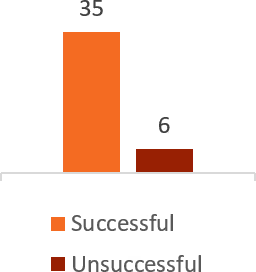
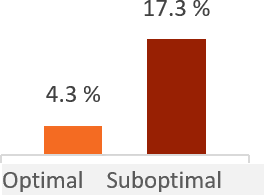
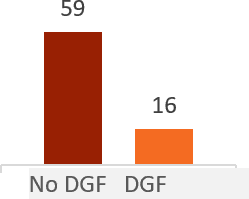
Optimal graft perfusion is key to achieving satisfactory post-transplant function. The possibility of evaluating vascular flows can lead to the early identification of vascular complications and reflect graft quality and outcome. From 1, 2022 to 1, 2024, transit time flow measurements (TTFM) were prospectively recorded in 75 consecutive kidney transplants (KTx) and analyzed alongside donor, recipient, transplant, and outcome data. Read more...
Preoperative Quantitative Flow Ratio, Intraoperative Transit Time Flow Measurement Parameters, and Their Predictive Value for Short-Term Graft Failure After Coronary Artery Bypass Grafting
Studies on the relationship between the preoperative quantitative flow ratio (QFR) and parameters of intraoperative transit time flow measurement (TTFM) are extremely rare. In addition, the predictive value of QFR and TTFM parameters for early internal mammary artery (IMA) failure after coronary artery bypass grafting still needs to be validated.. Read More.
Prognostic significance of intraoperative graft flow in distal bypass on long-term outcomes in patients with chronic limb-threatening ischemia
Background: The aim of the study was to determine the prognostic significance of measurement of graft flow on the patency of distal bypass.
Methods: A retrospective analysis was performed for 208 distal bypasses (208 limbs, 170 patients) with a single segment great saphenous vein conducted in a nonreversed manner from January 2009 to December 2019 in Japan. Patient backgrounds, operative details (including intraoperative mean graft flow), hospital outcomes, and long-term outcomes were evaluated. The primary endpoints were the primary, assisted primary, and secondary patency of the distal bypass graft and the secondary endpoints were limb salvage and wound healing.
Results: Read more...
Pulsatility index variations using two different transit-time flowmeters in coronary artery bypass surgery
Objective: Transit-time flow measurement is widely accepted as an intra-operative assessment in coronary artery bypass grafting (CABG).However, the two most commonly applied flowmeters, manufactured by MediStim ASA and Transonic Inc., have different default filter settings of 20 and 10 Hz, respectively. This may cause different flow measurements, which will influence the reported results. The aim was to compare pulsatility index (PI) values recorded by the MediStim and Transonic flowmeters in two different clinical settings: (1) analysis of the flow patterns recorded simultaneously by both flowmeters in the same CABGs; and (2) evaluation of flow patterns under different levels of filter settings in the same grafts.
Methods: Graft flow and PI were measured using the two different flowmeters simultaneously in 19 bypass grafts. Finally, eight grafts were assessed under different digital filter settings at 5, 10, 20, 30, 50 and 100 Hz.
Results: Read more...